Agriculture›Veterinary
The country vet keeps the whole operation running.
Independent large-animal and mixed veterinary practices are part of our agriculture strategy — the care that keeps herds healthy, ranches productive, and rural communities supported.
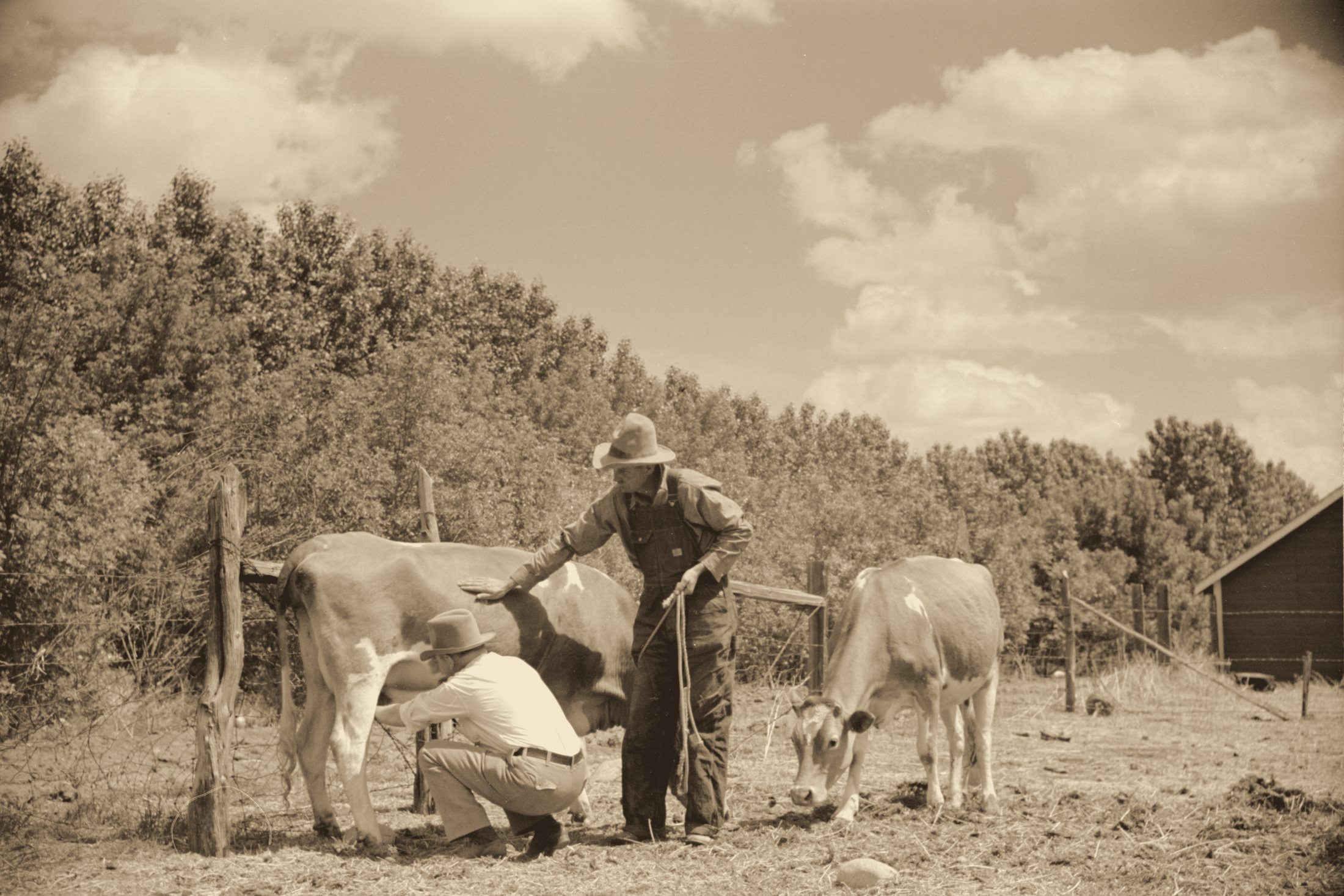
Checking a cow on a family farm · Farm Security Administration–Office of War Information Collection, Library of Congress
Horses outside a ranch barn in a Colorado snowfall.
A growing gap in rural care
Many rural counties struggle to keep a veterinarian who will treat cattle, horses and other livestock. Large-animal work means long drives, late-night calls and hard physical work, and fewer new veterinarians are choosing it. When the practice in a farming community closes, ranchers can be left hours from help when an animal needs it most.
Many of these practices are owned by a veterinarian nearing retirement, with no partner ready to take over. Selling to a large chain often means a shift toward pets in town and away from the ranch calls the community depends on.
Why it fits our agriculture strategy
Animal health sits at the center of every livestock operation. A practice that serves our own and allied cattle ranches, dairies and equestrian centers keeps those businesses sound, while continuing to serve every rancher and family in the area. The practice gains steady work; the operations around it gain care they can count on.
What we look for
- Established, profitable practices with large-animal, equine or mixed caseloads and a loyal client base.
- A skilled team — veterinarians, technicians and staff who know the clients and the country.
- Owners who want the practice to continue, on their own timeline, with the name and the care they built intact.
- Room to grow through added veterinarians, mobile and on-farm services, herd health programs, or related services such as nutrition and reproduction.
Keeping veterinarians in the country
The hardest part of rural vet care is recruiting the next veterinarian. We support practices in hiring, mentoring and keeping new veterinarians, so the care a community depends on outlasts the founder. Read how we train the next generation.
Questions
Frequently asked.
Why invest in a veterinary practice?
Rural and large-animal veterinary care is essential and hard to replace. Many independent practices are profitable but have no successor. A patient owner can keep the practice open and serving its community.
Does Omega buy veterinary practices?
Yes. We look for established, profitable large-animal, equine and mixed practices whose owners want the practice to continue. Owners can reach us confidentially.
Will the practice still serve other ranchers and families?
Yes. The practice continues to serve its whole community. Supporting our own operations adds steady work; it does not replace the clients the practice was built on.
Can the veterinarian-owner stay involved?
Yes. Owners can keep practicing, mentor the next veterinarian, or step back over time. We build each transition around what the owner wants.
Explore our agriculture focus
This page is for informational purposes only. It is not an offer to sell or a solicitation of an offer to buy any security, and it does not describe any specific investment. Any such offering would be made only through formal documents to accredited investors. Nothing here is tax or legal advice.
Preserve what matters.
Investors can join our network to begin a conversation. Owners can reach us confidentially about what comes next.